
Research Focus Areas
Designed to address the grand challenge of equitable heart failure care, our research areas define where we concentrate our efforts.
Together, they span the development of cutting-edge digital health technologies, the integration of these tools into connected systems of care and implementation models, and a commitment to equity and sustainability that ensures digital health solutions serve all communities while protecting future generations.
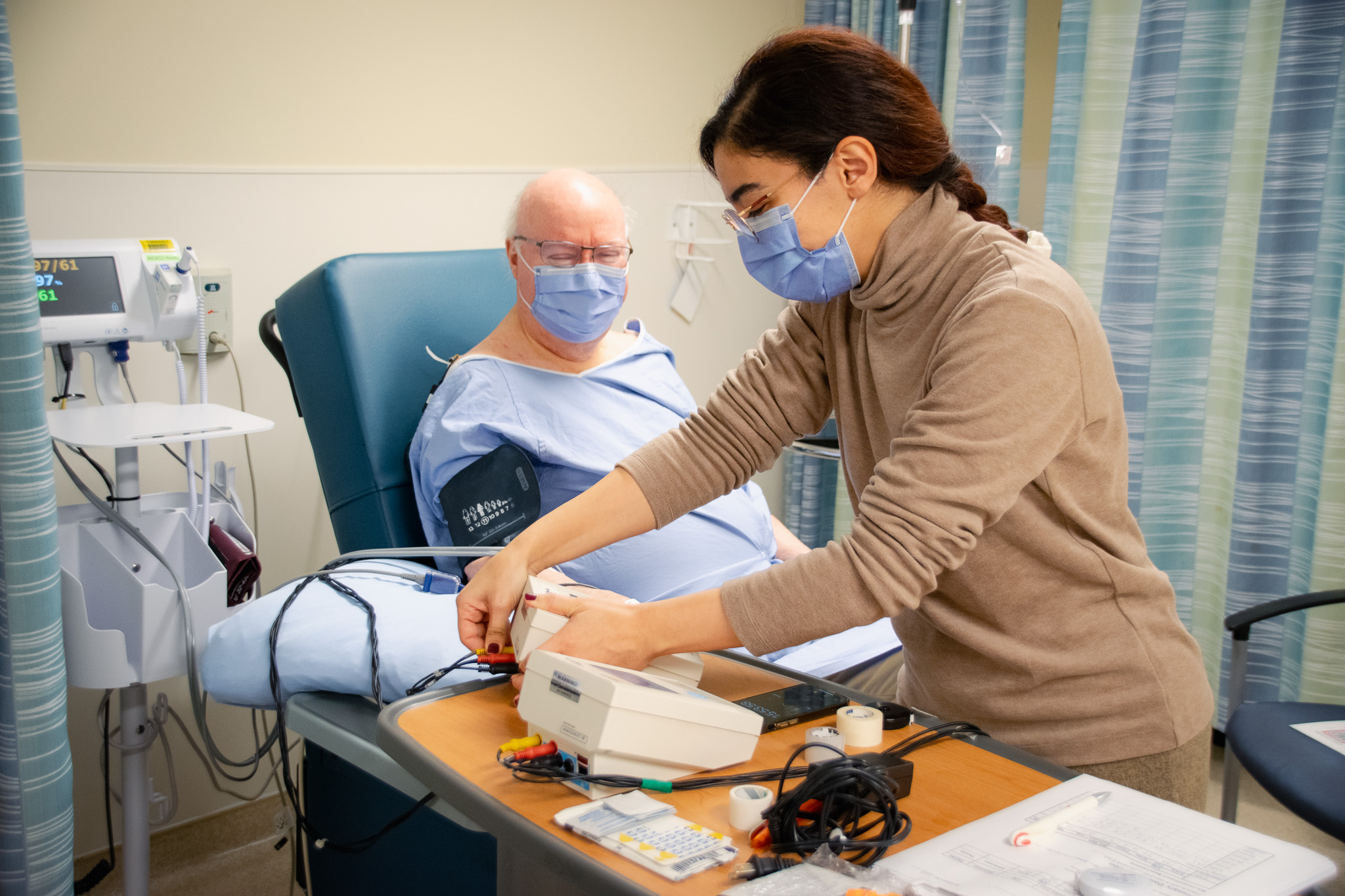

Wearables and Diagnostic Sensors
Wearable sensors and remote diagnostic technologies allow for real-time health monitoring that integrates seamlessly into everyday life, helping patients stay safe and supported at home. For example, sensors embedded in clothing can track vital signs such as heart rate, blood pressure, and fluid accumulation, while mobile apps, “lab-on-a-chip” devices, and consumer wearables (e.g., Fitbit, Apple Watch) extend diagnostic capabilities beyond the clinic.
The TRANSFORM HF network designs novel biosensors with consideration for the diverse needs of people living in Canada and explores how such devices can be effectively incorporated into new models of care. These innovations support early diagnosis, empower self-management, and reduce strain on healthcare systems by shifting care into community and home settings.

Machine Learning and AI
We leverage artificial intelligence and machine learning to generate predictive insights, personalize treatment pathways, and optimize clinical decision-making. By advancing novel statistical techniques and data science methods, we transform the immense streams of data generated by digital health tools into meaningful knowledge at both the individual and population levels. These approaches not only help anticipate health events and improve outcomes through timely treatment decisions, but also power innovation across our entire research network.
We support projects that develop, validate, and implement AI tools designed to empower patients in their own care while equipping healthcare providers with actionable insights. Our work emphasizes transparency, fairness, and the ethical use of data to ensure that AI in healthcare is safe, effective, and equitable.

Remote Monitoring and Management
We design patient-centered platforms that support the remote tracking of health outcomes and proactive management of chronic conditions. By shifting from episodic appointments to continuous monitoring, these approaches enhance continuity of care, reduce hospital readmissions, and improve patient–provider communication. Remote monitoring also reduces unnecessary travel — a particular burden for patients in rural and remote communities — while providing peace of mind and empowering patients in their own care.
Our network advances projects that integrate remote monitoring technologies into care pathways, enabling real-time dialogue between patients and their healthcare teams. By supporting proactive interventions before symptoms worsen, our work helps transform heart failure management from reactive to preventative, improving outcomes and quality of life for patients.

Models of Care and Digital Health Implementation
Many digital health innovations with promising research findings never make it into everyday clinical practice. This is often due to barriers such as complex healthcare settings, limited resources, or gaps in capacity — challenges that are even greater in communities that have historically faced inequitable access to care.
This research area focuses on co-developing and tailoring digital health tools so they are practical, effective, and scalable across diverse settings. By aligning technologies with community needs and clinical workflows, we aim to support their sustained adoption as part of standard care.
TRANSFORM HF helps researchers and trainees move innovations from design to delivery, ensuring that digital health solutions are created equitably, implemented effectively, and positioned for lasting impact on patient care.

Sustainable Digital Health
Sustainable digital health considers both the impact of healthcare on the environment and the ways climate and environmental changes affect human health. By taking a holistic, circular approach, this research area focuses on designing digital health technologies and systems that are environmentally responsible, resource-efficient, and resilient, while supporting patient health in a changing climate. This includes energy-efficient data infrastructures, sustainable device lifecycles, and strategies to ensure equitable access for all patients.
We support research and projects that integrate sustainability at every stage of digital health innovation. By considering environmental and human health together, we help create systems that are effective, responsible, and adaptable — supporting both healthier communities and a healthier planet.

Indigenous Heart Health
Improving health outcomes for Indigenous communities requires approaches that are culturally safe, community-led, and responsive to local priorities. This research area focuses on co-developing digital health solutions in partnership with Indigenous communities, ensuring that technologies respect Indigenous knowledge systems and support self-determined health innovation.